Plant pickup: Thursdays 3–7pm · Also by appointment 512.348.7570
— Market Garden · Texas-Grown
$12.00
Mature Plant Size: 3-5’x3-4′
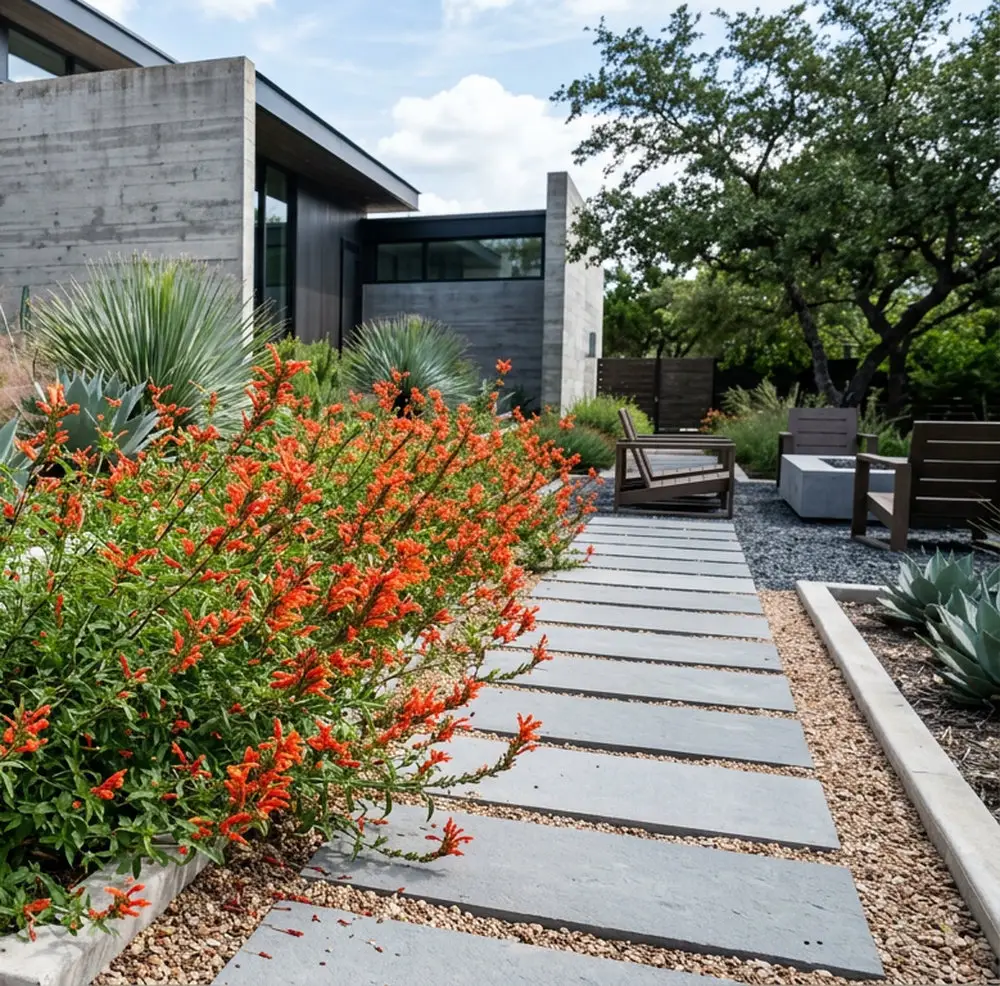
Red Flame Acanthus (Anisacanthus quadrifidus var. wrightii), also called Hummingbird Bush, is a Texas native shrub that covers itself in tubular, red-orange flowers from early summer until frost. Slender stems with small gray-green leaves form a spreading, airy mound. Heat and drought tolerant, deer resistant, and one of the best hummingbird magnets in the Central Texas garden, it is also a larval host for the Texan Crescent butterfly.
Our Red Flame Acanthus transplants are grown for vigorous branching and heavy bloom production suited to Austin’s hummingbird and pollinator gardens.
1 in stock
Low water needs once established
A rain or deep watering often triggers a flush of blooms
No fertilizer needed
Cut back in late winter (February) to encourage a compact shape and more blooms
Shear lightly in summer if it becomes leggy
Branches are somewhat brittle
Few pests or diseases
Brittle branches can break in wind
Leggy growth in too much shade
Excellent native for Austin’s limestone soils; roots are hardy and the plant returns each spring even after severe winters
Sources describe flowers as red-orange; ‘red’ selections vary somewhat in color from plant to plant
Wait for new growth in April, then prune out dead wood
Bloom peaks June through October; hummingbirds visit all day
Continues blooming until first frost; allow seed to form for birds
May die back to the ground after a hard freeze; cut back in February
Spring through early fall (fall preferred in Austin)
Ideal soil temperatures: 60-90 F
Full sun; tolerates part shade
Minimum 6 hours daily for best bloom
3-4 feet apart
Allows for mature size (3-5 feet tall and 3-4 feet wide)
Well-draining soil; adapts to limestone, caliche, clay, and sand
pH 6.5-8.0
Water deeply at planting
Water weekly for the first 4-6 weeks
Very drought tolerant once established
Flame Acanthus is not commonly listed by the ASPCA toxicity database, so no verdict is available either way. As a general precaution, keep an eye on pets around any unlisted plant and discourage grazing.