Plant pickup: Thursdays 3–7pm · Also by appointment 512.348.7570
— Plant Nursery · Texas-Grown
$12.00
Mature Plant Size: 3-4’x3-4′
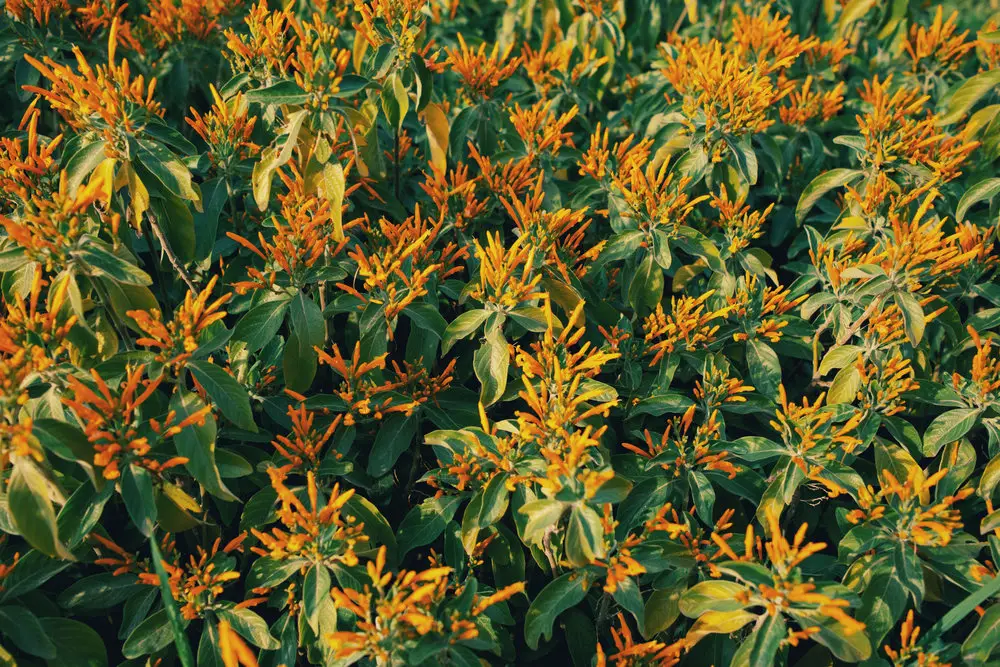
Firefly Firebush (Hamelia patens ‘Firefly’) is a compact selection of the classic hummingbird shrub, with leaves and flowers about half the size of the standard plant. Clusters of orange-red tubular blooms with yellow faces open from spring into fall above whorled, gray-green foliage that emerges red and turns bronze-orange in autumn.
At Flying Rabbit Farm, our Firefly Firebush transplants are grown for compact, mounding growth and nonstop summer color suited to Austin’s hummingbird and pollinator gardens and containers.
1 in stock
Moderate water needs; keep soil consistently moist but well-drained
Light feeding with balanced organic fertilizer in spring supports steady bloom
Prune lightly; heavy or frequent pruning can reduce blooming
Cut back frost-damaged stems once new growth resumes in spring
Aphids on tender new growth
Scale and spider mites occasionally
Not reliably cold hardy in Austin
Growers rate ‘Firefly’ hardy in Zones 9-11; Austin is Zone 8b, one zone colder, so treat it as a tender shrub and don’t count on it returning
Many gardeners grow it as an annual; planting in a protected spot with heavy mulch, or in a container brought indoors before the first freeze, gives the best chance of keeping it
Plant after danger of frost has passed; growth takes off as nights warm
Peak bloom season; hummingbirds and butterflies visit constantly
Continues blooming until first frost (early to mid November); foliage turns bronze-orange
A hard freeze will likely kill it back or outright; mulch heavily or move containers indoors before the first freeze
Late spring through summer, once danger of frost has passed and nights have warmed
Ideal temperatures: 65-95 F
Full sun; tolerates part sun
Minimum 6 hours daily
About 4 feet apart
Well-draining soil kept consistently moist
pH 6.0-7.5
Water deeply at transplanting
Water regularly until established
Firebush (Hamelia patens) is reported by growers as pet-friendly, but it is not clearly listed in the ASPCA toxic and non-toxic plant database, so no formal verdict is available. As a general precaution, keep an eye on pets around any plant not on the ASPCA list and discourage grazing, especially on the berries.