Plant pickup: Thursdays 3–7pm · Also by appointment 512.348.7570
— Plant Nursery · Texas-Grown
$3.00
Mature Plant Size: 2-6″x1-4′ spread
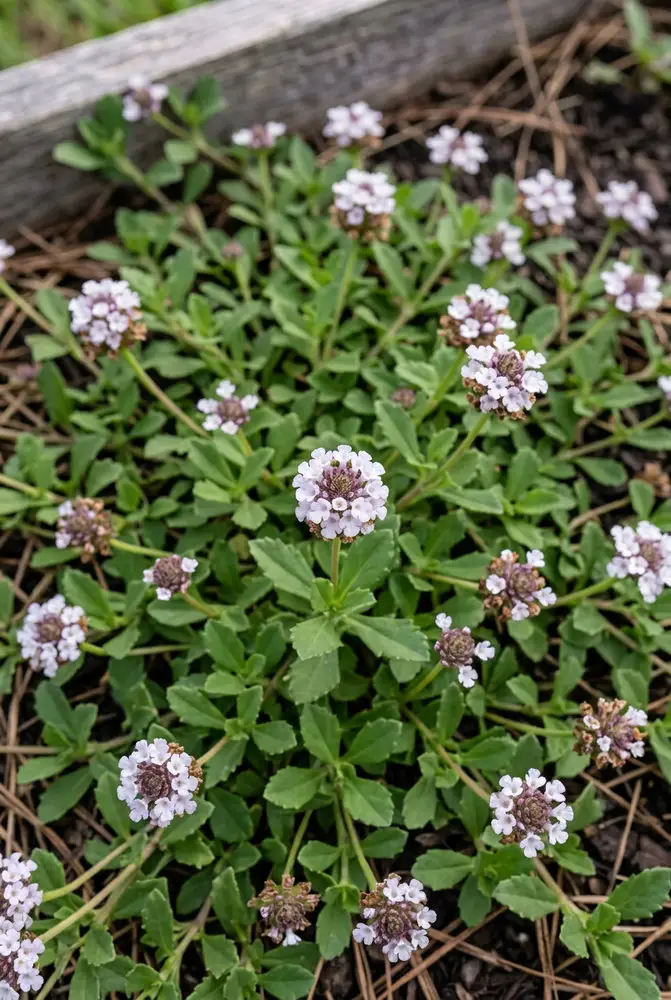
Frog Fruit (Phyla nodiflora) is a tough, fast-spreading Texas native groundcover that forms a dense, low mat of small green leaves dotted with tiny white-and-pink button blooms spring through fall. One of the best lawn alternatives for low-traffic Austin beds, it tolerates both drought and periodic flooding.
At Flying Rabbit Farm, our Frog Fruit transplants are grown for vigorous spreading habit and fast establishment suited to Austin groundcover and lawn-alternative plantings.
7 in stock
Low water needs once established; drought tolerant but also tolerates periodic flooding and poor drainage
Little to no fertilizer needed
Mow high (4-6 inches) occasionally to keep tidy and prevent fungal issues in dense mats
Tolerates light foot traffic once established, but not heavy or constant traffic
Generally pest- and disease-free
Can spread beyond intended bounds; edge or contain where a defined border is wanted
An excellent low-water lawn alternative for Austin’s clay soils, tolerating both drought and the periodic flooding that trips up many groundcovers
Host plant for Common Buckeye, Phaon Crescentspot, and White Peacock butterfly caterpillars, and a strong nectar source for many small pollinators
Active growth resumes; good planting window
Peak bloom and spread; thrives in heat with minimal water
Continues blooming and spreading; good secondary planting window
May brown slightly in a hard freeze but stays evergreen in mild winters; root-hardy in Zone 8b
Spring through fall
Ideal soil temperatures: 65-85 F
Full sun to part shade
Minimum 4-6 hours daily
12-18 inches apart; spreads to fill in
Adaptable to most soil types, including clay, sand, and poor or compacted soil
pH 6.0-8.0
Water deeply at transplanting
Keep evenly moist until established, then reduce
Frog Fruit is generally considered non-toxic to:
Not listed as toxic by the ASPCA; most references consider it pet-safe, though as with any unlisted plant it’s worth discouraging large-quantity grazing.