Plant pickup: Thursdays 3–7pm · Also by appointment 512.348.7570

— · Texas-Grown

Lemon Yellow Hibiscus / Rosemallow

$4.00


Mature Plant Size: 3-6’x3-5′

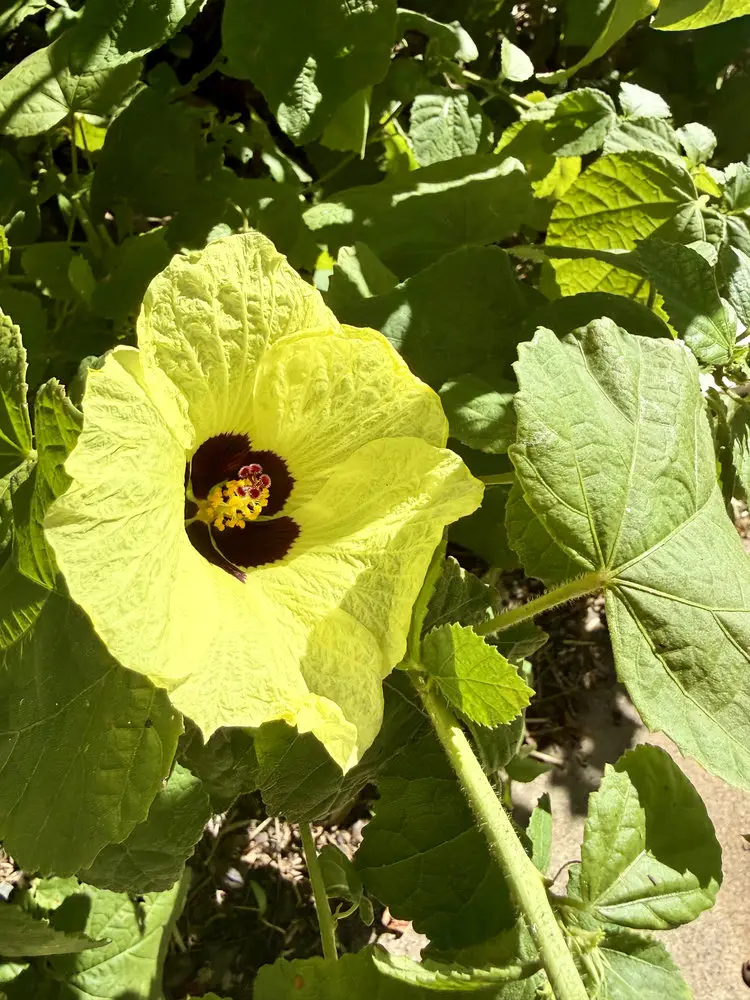
Lemon Yellow Rosemallow (Hibiscus calyphyllus) is a true perennial hibiscus for Austin — unlike the tropical Hibiscus rosa-sinensis, it goes in the ground and comes back on its own each spring. A loose, airy shrub with large velvety leaves, it blooms nearly non-stop from spring through fall with four-inch, primrose-yellow flowers centered by a deep burgundy-black eye.

At Flying Rabbit Farm, our Lemon Yellow Rosemallow transplants are grown for a full, well-branched habit and a long, reliable bloom season suited to Austin beds and large containers.

1 in stock

Care Instructions
Watering

Moderate, regular water; more consistent moisture needed than most of our xeric natives
A thorough soak roughly twice a month is typically enough once established, more during extended heat

Fertilizing

Light feeding with balanced organic fertilizer in spring and again mid-summer supports its long bloom season

Pruning & Maintenance

Cut stems to the ground after a hard freeze kills them back
Pinch or lightly prune young plants to encourage a fuller, bushier shape

Common Issues

Aphids and whitefly
Japanese beetles may skeletonize leaves in some years
Root rot in poorly draining, waterlogged soil

A genuine perennial for Austin — unlike tropical hibiscus, it does not need to be brought indoors, though it does die back to the ground each winter
A loose breathable mulch over the root zone through winter meaningfully improves its odds of returning strong the following spring, especially in its first year or two

Seasonal Notes
Spring

Slow to emerge from dormancy; be patient before assuming it didn’t survive. Best planting window once the ground has warmed

Summer

Peak, near-continuous bloom through the heat with regular water

Fall

Continues blooming into November in a typical Austin year

Winter

Dies back to the ground after a hard freeze; mulch the root zone well and cut back dead stems once they’ve fully browned

Best Time to Plant in Austin

Spring, after all danger of frost has passed and the soil has begun to warm
Ideal soil temperatures: 65-85 F

Sun Requirements

Full sun to part shade; afternoon shade is preferred in the hottest part of summer
Minimum 6 hours daily

Spacing

3-4 feet apart

Soil

Fertile, well-draining soil enriched with compost
pH 6.1-7.5

Watering After Planting

Water deeply at transplanting
Keep evenly moist through the first growing season to build a strong root system before its first winter

  • Lantana
  • Salvia
  • Firebush
  • Turk’s Cap

Hibiscus (Hibiscus calyphyllus, a Hibiscus species) is generally considered non-toxic to:

  • Dogs
  • Cats
  • Horses

The Hibiscus genus as a whole is not on the ASPCA toxic plant list; large quantities may still cause mild digestive upset, as with most garden plants.

You might also like


Login

Help us Grow!