Plant pickup: Thursdays 3–7pm · Also by appointment 512.348.7570
— Plant Nursery · Texas-Grown
$12.00
Mature Plant Size: 4-6’x4-6′
Fruit: 1/2″ marble-sized red berries; edible and eaten by birds
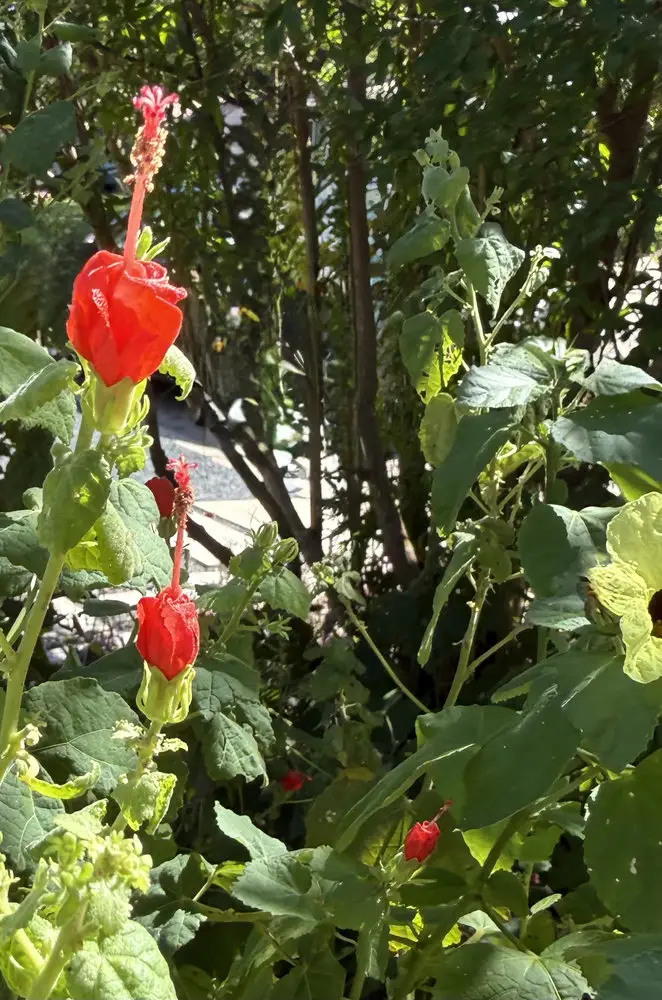
Big Momma Turk’s Cap is a Texas-bred hybrid from horticulturist Greg Grant (introduced in 2005) that combines the cold hardiness of native Turk’s cap (Malvaviscus drummondii) with larger flowers and a bigger frame. From mid-summer to first frost it bears showy, 2 3/4-inch scarlet-red blooms whose petals stay furled like a turban, followed by marble-sized red fruits. A favorite of hummingbirds, butterflies, and bees.
At Flying Rabbit Farm, our Big Momma Turk’s Cap transplants are grown for vigorous growth and heavy bloom suited to Austin’s shade and part-shade beds.
2 in stock
Blooms best when well watered; drought tolerant once established
Little to no fertilizer needed in moderately fertile soil
Cut to the ground in late winter, before it leafs out in spring
Pinch or lightly trim in summer to keep it full
Relatively pest and disease free
Leaves may curl or scorch in hot afternoon sun
Reliably winter hardy in Austin; it dies to the ground after a hard freeze and returns each spring
Grows bigger and fuller each year; give it room to reach 4-6 feet
Thrives in the dappled shade under live oaks and other trees, where little else blooms
Cut back old stems in late winter; new growth emerges from the roots
Blooms from mid-summer on; hummingbirds visit all season
Blooms until first frost (early to mid November); red fruits ripen in mid to late fall
Dies back to the ground after a hard freeze; roots are hardy
Spring through fall, avoiding the height of summer heat and hard freezes
Ideal soil temperatures: 65-85 F
Part shade to full shade; tolerates full sun with afternoon shade and regular water
4-6 feet apart
Well-draining, moderately fertile soil; tolerates clay and limestone
Water deeply at transplanting
Irrigate regularly until fully established
Big Momma Turk’s Cap (a Malvaviscus hybrid) is not commonly listed by the ASPCA toxicity database, so no verdict is available either way. The fruit is described by growers as edible and is eaten by birds and mammals. As a general precaution, keep an eye on pets around any unlisted plant and discourage grazing.