Plant pickup: Thursdays 3–7pm · Also by appointment 512.348.7570
— Plant Nursery · Texas-Grown
$3.00
Mature Plant Size: 6-12″x12-18″ spread
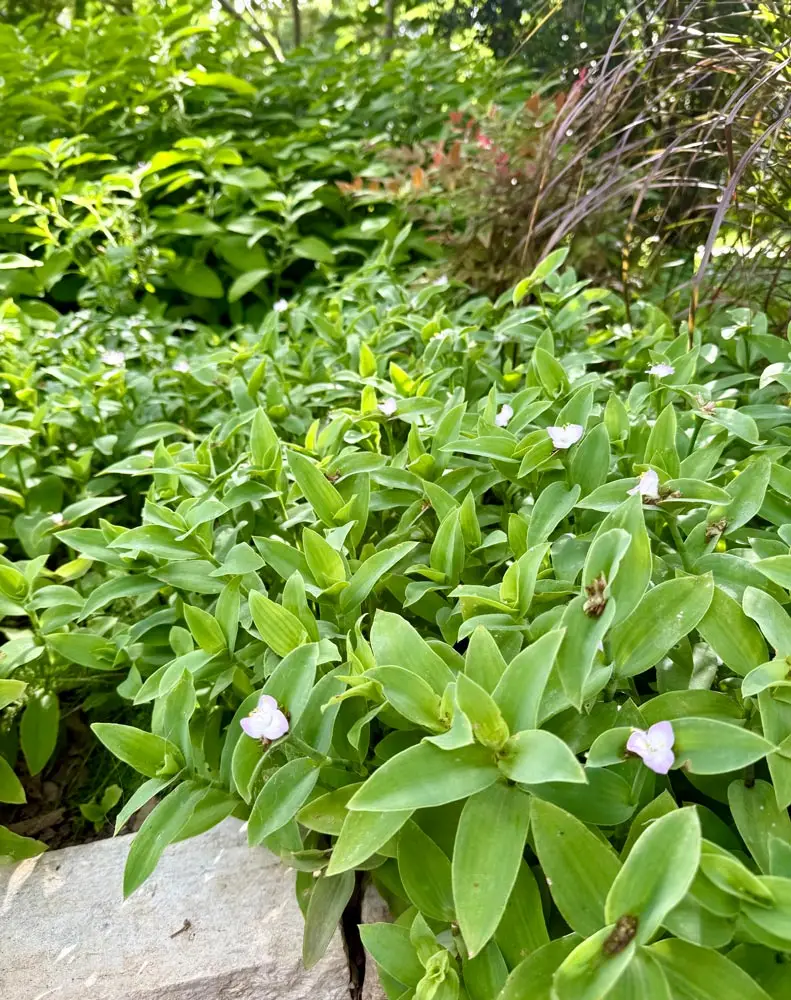
Trans-Pecos Spiderwort (Tradescantia brevifolia) is a charming, semi-succulent native perennial ground cover endemic to the Trans-Pecos region of West Texas and northern Mexico, where it grows naturally on rocky, north-facing slopes and mountainsides. Its soft, fleshy, grey-green leaves are distinctly smaller and more compact than other spiderworts, forming a low, spreading carpet that roots readily at every node. From summer through fall, the tips of its trailing stems are adorned with delicate, fragrant, three-petaled pink to light violet flowers that are a special value to native bees. Extraordinarily easy to propagate — any broken stem pressed into moist soil will root — Trans-Pecos Spiderwort spreads quickly to fill shaded, difficult-to-plant areas with lush, living color.
At Flying Rabbit Farm, our Trans-Pecos Spiderwort transplants are grown for vigorous spreading habit and outstanding adaptability to Austin’s shaded beds, container plantings, and low-water landscapes.
100 in stock
Low to moderate water needs once established
Drought-tolerant; more moisture-tolerant than many xeric plants
Water deeply but allow soil to dry slightly between waterings
More frequent watering needed in full sun or containers
Minimal fertilizing needed
Light application of balanced organic fertilizer in spring
Excess nitrogen produces lush foliage at the expense of compact habit
Trim or pinch back to control spread and encourage dense growth
Cut back hard after freeze damage in winter
Remove brown or dead stems in early spring before new growth emerges
Propagate freely — any stem segment pressed into moist soil will root
Root rot in poorly draining or waterlogged soils
Spider mites during extended hot, dry periods
Cottontail rabbit browsing (plants recover well once established)
Can spread aggressively in moist, favorable conditions; manage spread as needed
One of the most carefree and propagation-friendly ground covers available for Austin’s shaded spots
Excellent choice for difficult north-facing beds, under trees, and alongside fences where other plants struggle
Root-hardy in Austin winters; may die back to the ground in a hard freeze but regrows reliably in spring
Cuttings root effortlessly — simply press a stem into moist soil and keep watered; no rooting hormone needed
New growth emerges vigorously from roots after winter; excellent transplanting window
Begin harvesting stems to propagate and fill additional areas
Flowers emerge on stem tips; bloom continues through fall
Spreads rapidly in warm conditions; trim as needed to control boundaries
Continued flowering and active spreading
Excellent planting window for establishment before winter
May die back to the ground in hard freezes; root system is cold-hardy in Austin
Protect roots with light mulch during severe cold snaps
Fall through spring for best establishment
Can be planted nearly year-round except during hard freezes
Ideal soil temperatures: 55-75 F
Partial shade to full shade
Tolerates morning sun with afternoon shade
Full sun is possible but requires more moisture and may stress plants
12-18 inches apart
Spreads and fills quickly; roots at every node in good conditions
Well-draining, moderately fertile soil
Tolerates a wide range of soils including rocky or sandy types
Avoid waterlogged, constantly wet conditions
pH: slightly acidic to neutral preferred (below 6.8)
Water thoroughly at transplanting
Keep evenly moist for the first 2-3 weeks until established
Reduce once roots are set
Trans-Pecos Spiderwort is considered mildly toxic to:
Contact with sap may cause skin irritation or allergic dermatitis in sensitive pets and humans.
Ingestion may cause mild gastrointestinal upset including drooling, vomiting, or diarrhea.
Keep pets from chewing on plants; contact a veterinarian if significant ingestion occurs.